

 See My Latest Article on HelloNation
Busy households usually benefit from materials that tolerate moisture, dirt, frequent cleaning, temperature changes, and everyday wear without demanding constant refinishing. In Howard, OH, seasonal weather adds another consideration: materials may need to handle cold winters, summer humidity, snow, mud, and repeated freeze-and-thaw cycles.
The most practical choices are not always the least expensive at installation. A better comparison includes cleaning needs, repairability, expected service life, moisture resistance, and how easily a damaged section can be replaced.
Which flooring materials require the least maintenance?
Luxury vinyl plank, porcelain tile, and well-sealed sheet flooring are among the easiest flooring choices for active households. Each has different strengths, so the right option depends on the room and the type of wear it receives.
Luxury vinyl plank is practical for living areas, kitchens, hallways, and finished lower levels. It resists surface moisture, handles routine sweeping and damp mopping, and is more forgiving than brittle tile if toys or household items are dropped. Quality installation still matters because uneven subfloors can cause movement, gaps, or visible wear.
Porcelain tile works well in entryways, bathrooms, laundry rooms, and other areas exposed to water or tracked-in debris. It is hard, stain-resistant, and easy to clean. The grout is usually the part that requires attention, especially if it is light-colored or poorly sealed. Larger tiles can reduce the number of grout joints, although the floor still needs a properly prepared, flat base.
Sheet flooring has fewer seams than plank or tile products, making it useful in laundry rooms, mudrooms, and bathrooms. A carefully installed sheet surface can limit places where water and dirt collect. It may not provide the same visual depth as plank flooring, but its simple cleaning routine can be valuable for families prioritizing function.
Carpet is still comfortable in bedrooms and family rooms, but it generally requires more frequent vacuuming and occasional deep cleaning. For homes with pets, allergies, or frequent spills, hard-surface flooring may be easier to manage.
What countertop materials are easiest to clean?
Nonporous or low-porosity countertops usually require less daily care than absorbent natural stone or unfinished wood. Quartz-style engineered surfaces, solid-surface materials, and properly sealed porcelain slabs are common low-maintenance options.
Engineered quartz does not typically require routine sealing and can be wiped clean with mild soap and water. It is suitable for many kitchens and bathrooms, but very hot cookware should not be placed directly on the surface unless the manufacturer’s care instructions allow it.
Solid-surface countertops have the advantage of repairability. Minor scratches may be reduced or refinished, and integrated sinks can eliminate a seam where crumbs and moisture collect. This can be useful in kitchens where cleaning speed matters.
Porcelain surfaces resist stains, heat, and moisture, but edges and corners can be vulnerable to impact. Careful edge design is helpful in homes where kitchen work is often done quickly or by several family members at once.
Natural stone can also be durable, but granite, marble, and some other stones may require periodic sealing. Stone is not automatically low maintenance simply because it is hard. The absorption rate, finish, and sealing schedule matter more than appearance alone.
Which cabinet finishes hold up best to daily use?
Smooth painted finishes, laminate, thermofoil, and wood cabinets with a durable factory finish can all work well, but they behave differently under heat, moisture, and impact.
Laminate cabinet doors are easy to wipe down and offer consistent color. They can be a practical choice for busy kitchens, especially when paired with simple hardware and flat or lightly detailed door profiles.
Thermofoil surfaces are also easy to clean because they have few exposed joints. However, prolonged heat and steam near dishwashers, ranges, or small appliances can cause edges to loosen over time. Adequate ventilation and heat protection help extend their service life.
Painted wood cabinets can be attractive and repairable, but they may show fingerprints, chips, and wear more readily than textured or wood-grain surfaces. A lower-sheen finish can disguise small marks better than a high-gloss finish.
For any cabinet material, the design affects maintenance. Deep decorative grooves, open shelving, and numerous small hardware pieces create more places for dust and grease to collect. Simple door fronts and full-extension drawers are usually easier to clean and organize.
What bathroom materials reduce cleaning work?
Bathrooms are easier to maintain when they have fewer seams, nonabsorbent surfaces, and properly sloped areas that drain completely.
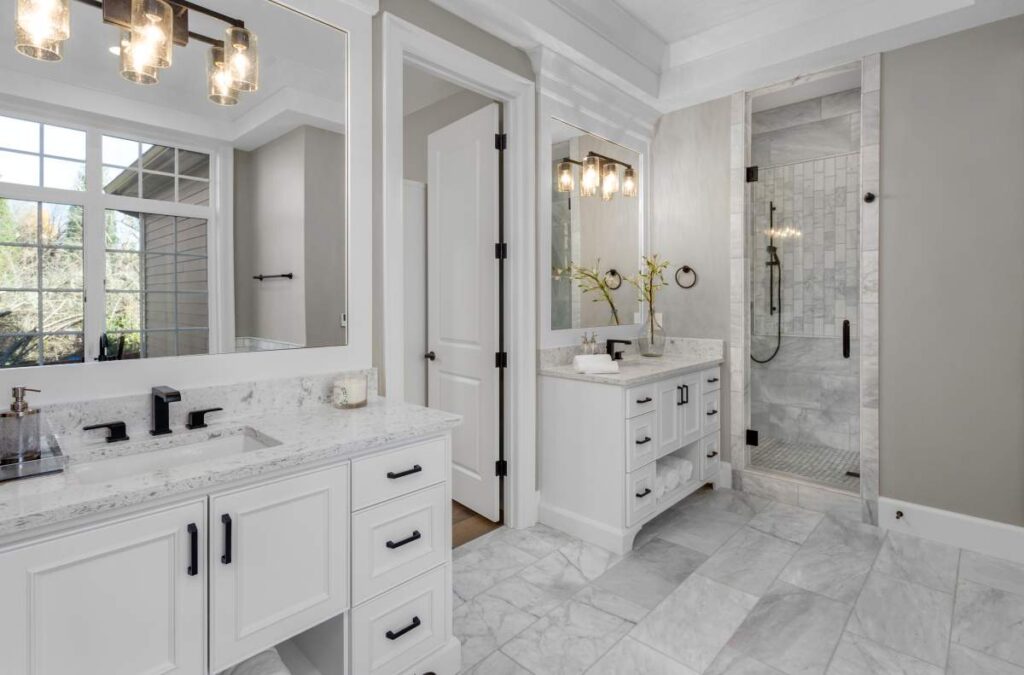
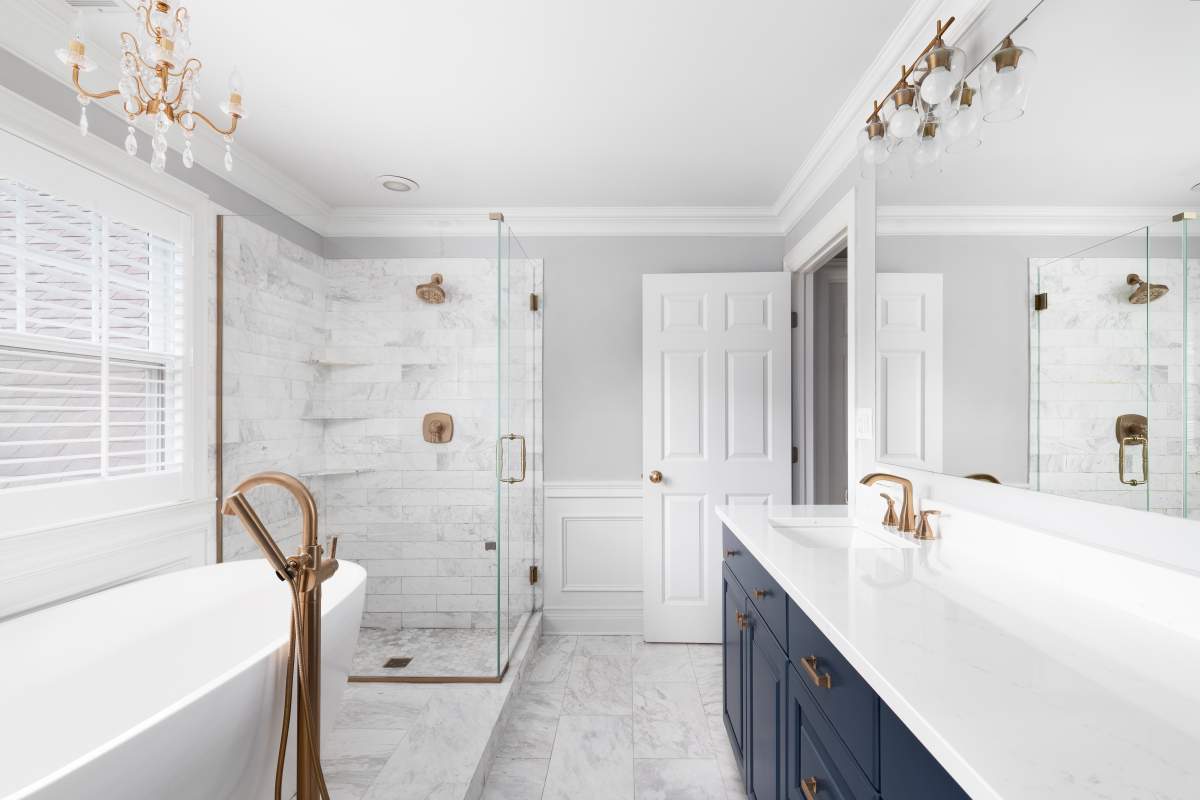
Large-format porcelain tile can reduce grout lines on walls and floors. On shower floors, however, tile size must still allow for proper slope, so very large pieces may not be suitable in every layout. Textured surfaces improve traction but can collect more soap residue, so the finish should balance safety with cleanability.
Solid-surface shower wall panels and other seamless wall systems can reduce grout maintenance substantially. They are especially useful for households that want to avoid scrubbing numerous tile joints. The installation must be watertight, since a low-maintenance surface cannot compensate for poor waterproofing behind it.
A wall-hung toilet can make floor cleaning easier, although the wall structure and plumbing must be designed for that installation. In any bathroom, a properly functioning exhaust fan is as important as the finish materials. Controlling humidity helps reduce mildew, peeling paint, and damage to trim.
Which exterior materials need the least upkeep?
For siding, trim, and outdoor living areas, durability depends on both the product and the exposure of the specific wall or surface.
Fiber-cement siding, vinyl siding, engineered wood siding, and brick each have different maintenance patterns. Vinyl generally needs occasional washing and inspection of seams. Fiber-cement siding usually requires painted finish maintenance over time, but it resists many common problems when installed correctly. Brick has low routine maintenance but still needs periodic inspection of mortar joints and areas around openings.
Composite decking can reduce the staining, sealing, and splintering associated with traditional wood decking. It still needs sweeping and washing, and darker colors may become hot in direct summer sun. Proper spacing and drainage are essential so leaves and moisture do not remain trapped against the structure.
For exterior doors and trim, fiberglass often requires less repainting than wood. Weatherstripping and threshold condition matter just as much as the door material because drafts and water intrusion can create ongoing maintenance problems.
How should families compare “low maintenance” materials?
A material is low maintenance only when it fits the room, the household, and the installation conditions. Before choosing, consider:
- How often the surface will be exposed to water, mud, grease, or pets
- Whether the material needs sealing, repainting, or specialized cleaning
- How easily one damaged plank, tile, panel, or door can be replaced
- Whether the color and texture will show fingerprints, dust, or scratches
- How the material responds to heat, sunlight, snow, and seasonal humidity
- Whether the subfloor, wall, framing, ventilation, and drainage support the product
It is also useful to keep leftover flooring, tile, paint, or trim after remodeling. A small reserve can make future repairs easier, particularly if a finish is discontinued or color matching becomes difficult.
For households in Howard, seasonal mud and snow make entry zones especially important. Durable flooring, washable wall paint, closed storage, and a clearly defined place for wet footwear can reduce cleaning throughout the rest of the home. In kitchens and bathrooms, moisture-resistant materials and good ventilation often prevent more work than expensive finishes alone.
The most dependable low-maintenance remodeling plan usually combines durable surfaces with simple details: fewer seams, accessible storage, washable finishes, effective ventilation, and materials that can be repaired in sections rather than replaced as a whole.